

Blog Categories
Web design Branding Blogging Social Media Inbound All
We post weekly tips, tricks, and marketing advice to help grow your business.

How To Write Social Media Captions For Boudoir Photography
When we realized that our little agency was a hit in this big industry, we soaked it all up. Over the past year, we’ve worked with several boudoir photographers all over the U.S. to help them grow a presence and develop their brand on social media.
So what does social media management for a boudoir photographer look like? Well, in a nutshell, the photographer provides us with a voluptuous gallery of content, gives us creative freedom to use whatever images we think will work best, and attach a caption accordingly. (We also implement a strategy for increasing engagement and growth of the platforms but we’ll leave that wealth of wisdom for a different post.)
In this blog post, I’m going to share how I come up with captions for the boudoir photographer social media accounts that I manage. Here goes!

Ok, it’s no secret that marketing for boudoir photographers is our cup of tea. 😏Our passion for the industry is derived from our appreciation of the female form. We’re all about encouraging positive body image. I myself have participated in several boudoir shoots … and I know first-hand what the experience can do for the self-esteem. (Read about my very first shoot here!)
When we realized that our little agency was a hit in this big industry, we soaked it all up. Over the past year, we’ve worked with several boudoir photographers all over the U.S. to help them grow a presence and develop their brand on social media.
So what does social media management for a boudoir photographer look like? Well, in a nutshell, the photographer provides us with a voluptuous gallery of content, gives us creative freedom to use whatever images we think will work best, and attach a caption accordingly. (We also implement a strategy for increasing engagement and growth of the platforms but we’ll leave that wealth of wisdom for a different post.)
In this blog post, I’m going to share how I come up with captions for the boudoir photographer social media accounts that I manage. Here goes!
Identify your vibe.
All boudoir photographers may share a common theme of nude or almost nude images but that’s pretty much where the similarities end. Boudoir is an art and each photographer has a very different style and vibe. With that said, I never ever EVER use the same captions on different photos from different photographers. To be blunt, it’s lazy and just not how our agency rolls. The captions I come up with are completely based on each photographer’s vibe.
For example, we have boudoir photographer clients who lean toward a soft, whimsical feel. We have clients who showcase an erotic or darker side in their art. Natural … glamorous … dramatic … you name it, I’ve written copy or selected captions for the style! The goal is to always mimic the style of the photographer.
The captions must flow with your style of art. If you specialize in outdoor boudoir and have a gallery full of fantasy or fairytale type images, the captions used on your social media platforms will be very different from a photographer who boasts black leather and red lipstick in their work. Always match the tone of the caption to the style of the work.
Variety is key.
I tend to gravitate toward quotes from poets. However, I’m not a one-trick pony so I like to keep things interesting. I’ll pull in engaging mantras, “10 Ways How To … ,” or ask a question seeking a response. Some days I’ll mix in a “How are you spending your Sunday Funday?” The point is, don’t just slap a Marilyn Monroe quote on every photo and hope for the best. You need to put some thought and energy into your captions. It makes a huge difference and will set you apart.
Also, the tone of your captioning should somewhat represent you as a photographer. Some of my clients are very open to blunt and sexually charged captions. It fits their personality and style as a photographer. I also have clients who are much more reserved or discreet. In these cases, I take a softer approach.
Keep in mind the region where you’re located, too! A photographer in the New York City area may have a more open-minded audience than perhaps a photographer in a Bible Belt state. Caption your photos so they speak to the audience you’re primarily serving.
Hashtags are life.
I mean, sometimes I view them as a necessary evil but you catch my drift. Using appropriate and geographical hashtags is a giant deal. Hashtagging “#boudoir,” “#boudoirphotography,” “#boudoirinspiration,” etc. is fine ... and it won’t hurt anything ... but broad hashtags are probably not going to help you a whole heck of a lot.
Who is your target audience (or buyer persona)? Is she a young mom in her 30’s? Do some research on popular hashtags for moms in your area. Or maybe your ideal client is a woman in her 50’s or 60’s who is a high-level executive. Take a gander at female career-focused hashtags in your region.
For more on crafting a detailed client persona, use our go-to tool: HubSpot’s Make My Persona Tool!
Lastly, don’t machine gun hashtag. It looks cheap and serves no purpose. Use relevant hashtags that have an actual following (who just so happens to match your ideal client persona).
Proofread your copy!
The death of all credibility can be attributed to poor grammar and punctuation. Seems silly and ridiculously simple but it’s legit ... and extremely important.
If you need a giggle, check out these epic grammatical mistakes made by marketers … shared by our friends at Impact!
Well, there you have it. Easy peasy, lemon squeezy. 🍋(Well, on second thought, maybe it’s not that easy because if it was, everyone would do it ... and we’d be out of a job. 🙀)
Just like your beautiful photography, successful social media management is an art. It’s an honor to be entrusted with the opportunity to share such empowering photos with the world. Follow these tips so you can do so in a way that preserves the authenticity and true beauty of what you see from behind your lens.
Looking for more marketing tips specific to the boudoir photography business? Subscribe to our blog!

How To Make A Mood Board On Pinterest
Mood boards can be incredibly helpful in the website and branding design process. In this blog post, we’re going to explain the benefits of creating a mood board and how you can make one using Pinterest.

Mood boards can be incredibly helpful in the website and branding design process. In this blog post, we’re going to explain the benefits of creating a mood board and how you can make one using Pinterest.
What’s a mood board?
Remember back in the day when you used to make those colorful collages out of magazine clippings? You’d forage your favorite publications for photos, words, or quotes that inspired you and then excitedly glue them to a poster board. Well, that’s the same concept behind a mood board!
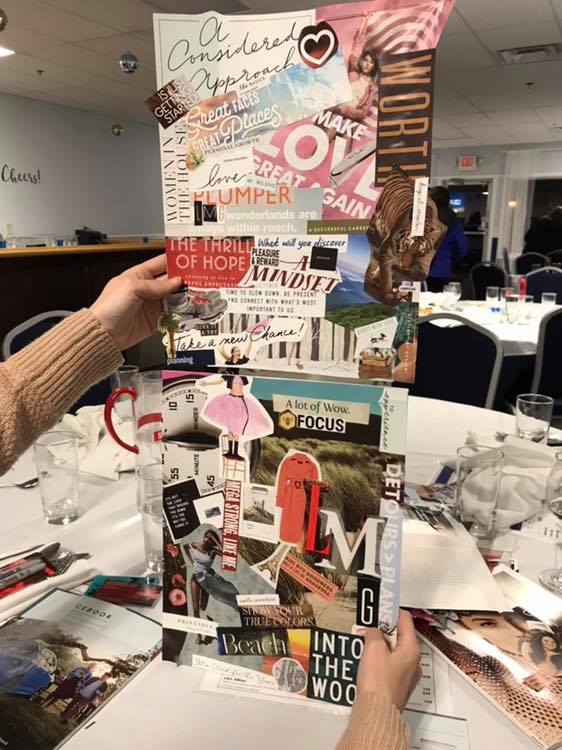
Me and Katie attended a networking event this month and we made old school inspiration boards. How did we do?
When we’re working with a website design or branding client, we have them make a mood board on Pinterest (which, by the way, is much easier than using magazines, scissors, and glue). When searching for images, we ask the client to keep their target buyer persona in mind and choose the things that would inspire them. Remember, when designing a website or brand, it’s more about what your target customer will like than about what you like. (However, if you and your target customer happen to like the same kinds of things, well … that’s even better! It makes creating your mood board a bit easier.)
How To Create A Mood Board For Branding Or Website Design
Step 1:
If you don’t already have one, write a clear and detailed description of your target buyer persona. This step is key! Again, your brand and website needs to resonate with this person. If you need help, we recommend reading HubSpot’s blog post: How to Create Detailed Buyer Personas for Your Business. In it, there’s a free Persona Templates Guide you can download.
Step 2:
If you’re a creative entrepreneur, chances are, you already have a Pinterest account. If you don’t, you’ll need one for this exercise! To do this, go to Pinterest.com and enter:
Your email
A password
Your age

(Note: You can also sign-up using your Facebook or Google account.)
Step 3:
Once you’re logged in, access your profile by clicking on your name in the top right corner of the screen. Then scroll down the page a bit and click on the Boards option that’s underneath your info. If you’re an active Pinterest user, you’ll see all of the boards you’ve already created here. If you’re new to Pinterest, this area will be empty.

Step 4:
Within the Boards section, click the red plus sign to Create Board. In the pop-up box that appears, you can name your board Mood Board (or any other fun name you can come up with). Then click Create.

Step 5:
Now it’s time to fill that board with all the things your target buyer persona would love! When you create a new board, Pinterest will offer up some ideas for it. You can search through those ideas or start typing words in the search bar at the top of the screen. (Note: searching is an easy task when you have a crystal clear description of your target buyer persona!)

As an example, we’re going to show you an actual buyer persona profile (below) so you can make the connection on how the details might affect your search.
Name: Carly
Age: 34
Location: Philadelphia, PA
Relationship/family status: Married (no children)
Pets: Boston Terrier
Education level: Bachelor’s Degree
Occupation: Interior Designer
Annual income: $90,000
Favorite Blog: Design Hunter, Eye Swoon, House of Brinson
Magazines or books: Anything Lisa Scottoline and the latest Pottery Barn catalogue
Hobbies: Sketching rooms/outdoor scenery, yoga, collecting art, and cooking healthy meals
Brands: Pottery Barn, RH, White House Black Market, Hello Fresh
Social media platforms they spend time on: Pinterest, Instagram
TV: Everything HGTV and Food Network
Based on Carly’s profile, here are the search queries we used to fill our board!
Philadelphia
Philadelphia Interior Design
Philadelphia Signage
Fruits
Vegetables
House of Brinson
Pottery Barn
Career Woman Quotes
Scenery Sketches
Artwork
Yoga
The most important part of Step 5 is: Do NOT overthink it! Search terms that are related to your target buyer persona and pin anything that stands out to you!
Here’s the board we came up with for our example buyer persona, Carly …
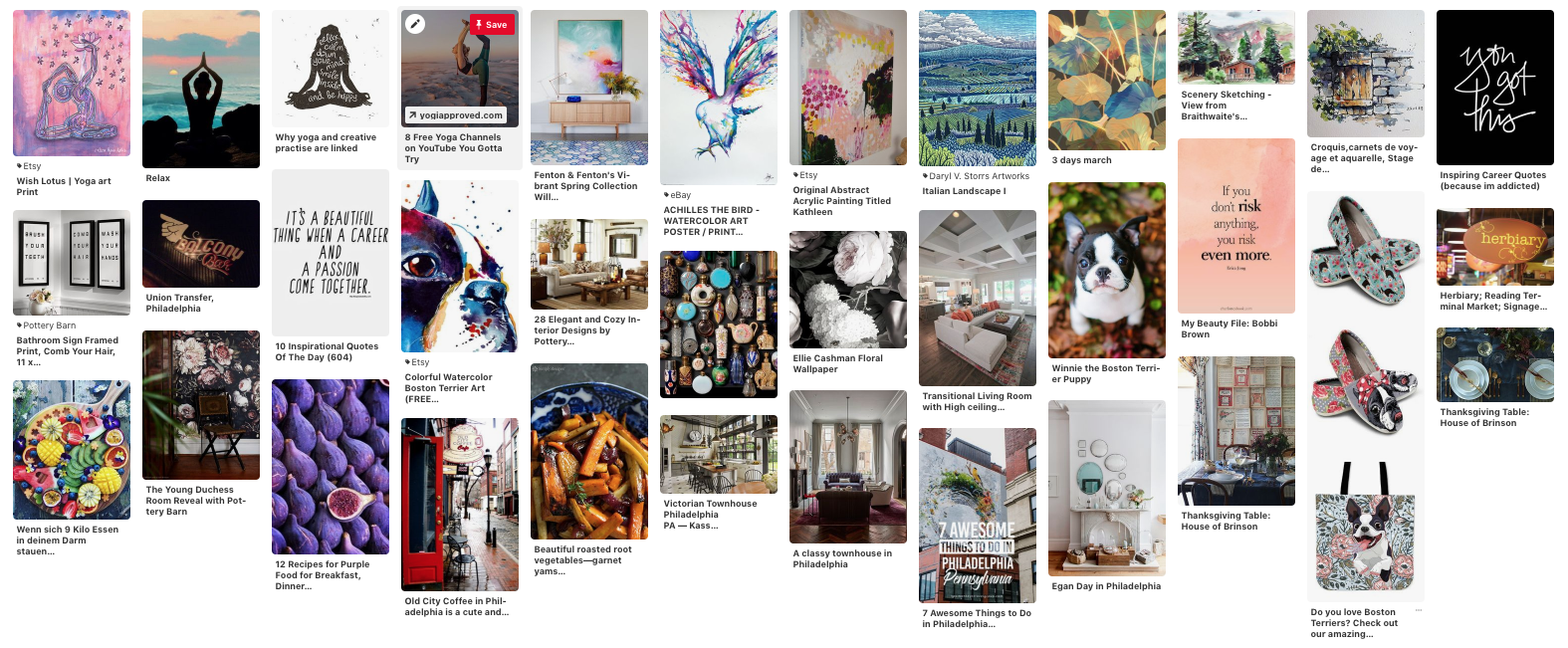
Take a step back and look at your mood board as a whole. Are there any common elements that stand out to you (i.e. colors, patterns, fonts, objects, etc.)? Jot them down because they can be incorporated into your website and/or brand design!
Step 6:
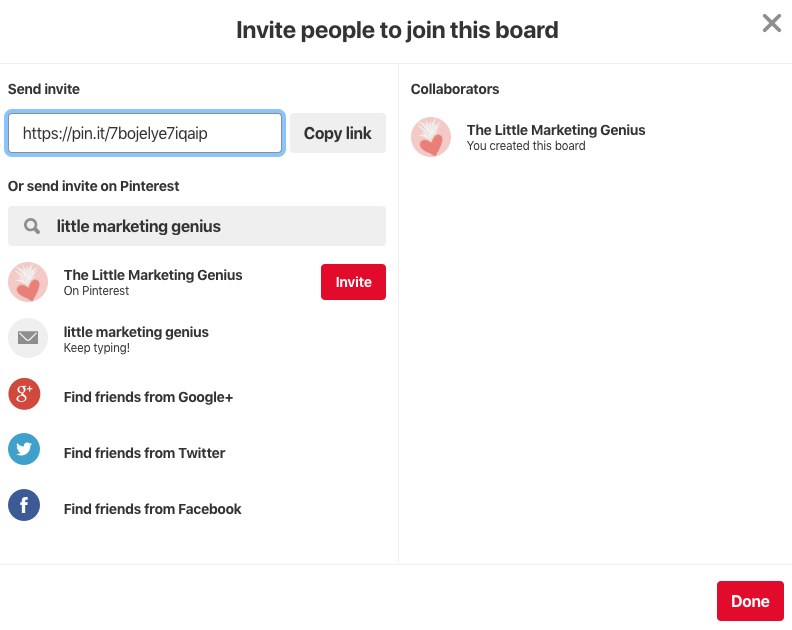
If you purchased a website or brand design package from LMG, you’ll need to share your mood board with us. To do this, go into your board and copy the URL from your web browser. Then, paste that URL in the Mood Board section of your Branding Prep Planner. (If you made your board secret, you can share it with us by clicking the little icon of a person with a plus symbol at the top of your board. Search Little Marketing Genius and then click Invite.)
Mood boards are super fun to create. And by building a board from the perspective of your target buyer persona, you’ll end up with a fantastic visual of what inspires them. Give this exercise a spin and comment below with your findings!
Looking to take your small business to the next level? We can help design a brand your target audience will love! Book a free 15-minute consult with us to get the process started today!

5 Must-Have Elements For A Fabulous Boudoir Photography Website
Fun Fact: More than half of the clients we serve are in the business of boudoir photography. I guess you can call it our niche! In working with boudoir photographers, we’ve learned a lot about what it takes to attract clients … a fabulous website, of course, being one of the things. In this blog post, I’m going to share five must-have elements for a boudoir photography website.

Fun Fact: More than half of the clients we serve are in the business of boudoir photography. I guess you can call it our niche! In working with boudoir photographers, we’ve learned a lot about what it takes to attract clients … a fabulous website, of course, being one of the things. In this blog post, I’m going to share five must-have elements for a boudoir photography website.
#1. A portfolio that resonates with your ideal client.
If you follow our blog then you know that every successful marketing project begins with a deep understanding of your ideal buyer persona. With a photography website, it’s critical that your portfolio pieces speak to the type of client you’re looking to attract.
If you’ve never written a profile for your target buyer persona, I strongly suggest taking the time to do so. To start the process, just think about the most amazing client you’ve ever worked with. From there, craft their story. If you get stuck, HubSpot has some pretty neat tools for creating buyer personas:
Once you’ve completed the exercise and you have your profile pretty well fleshed out, perform an in-depth review of your portfolio pieces. Do they accurately represent that amazing client who you based your buyer persona profile on? If not, it’s time to refresh those portfolio pieces with photos that will better resonate with the type of client you love working with the most.
#2. Helpful insights into your process.
The thought of doing a boudoir photography session can be intimidating to someone who is brand new to the experience. By sharing detailed insights into your process and setting clear expectations up front, you can help ease some of these anxieties and better guide the prospective client through their sales journey.
Again, let’s think about your favorite clients. What were their initial hesitations and how did you help resolve them? Sharing this type of information will establish a level of trust and hopefully prompt prospective clients to take the next step toward contacting you.
#3. A blog.
Blogging is a highly effective way to not only showcase your special projects and serve as a resource to site visitors, but to improve your SEO as well! Yes, we know that writing blog posts is probably buried on your To-Do List. (Pretty much every boudoir photographer we work with juggles an incredibly hectic schedule most days.) However, blogging is an investment that will pay dividends down the road.
I recommend creating a content calendar. Take a day to plot out all of your blog posts for the month. (Don’t hate me but I’d love to see you shoot for one post per week 😧). Based on that, you can then organize social media posts and email marketing campaigns that will tie in.
Need some help launching your blog? Read this blog post we recently published: How To Start A Business Blog
#4. A prominent opt-in gift.
As a boudoir photographer, you probably view your email subscribers as gold. They’re the people who are very interested in what you have going on and are probably following you on social media as well. These are the people you need to stay in front of.
So how do you grow that golden list of subscribers? With a free opt-in gift, of course. The truth is, when people visit your website, they’re visiting for a reason. Most likely, they’re interested in the services you provide. However, the people who are very interested in your services are the people who are willing to give you their email address. It’s their way of raising their hand and shouting, “Yes! I’m interested in what you have to say.”
Unfortunately, I’m here to tell you that a boring old subscribe button is probably not enough. People are hesitant about signing up for emails these days. If someone is already interested in your service (which is evidenced by them being on your website to begin with), they’ll be more inclined to download a guide or checklist from you. Yes, these downloadable freebies are what we refer to as opt-in gifts!
When coming up with your opt-in gift, try and think about something that would be especially helpful to a potential client. Maybe it’s a checklist of 10 Things To Do Before Your Boudoir Photography Session. Or perhaps it’s a Guide To Getting Ready For Your First Boudoir Shoot. Whatever you decide, be sure the value of the free gift is enough to make them enter their email address in order to access it.

Pro Tip:
The opt-in gift could be something you already use with clients to prepare them for working with you! Do you have a checklist or worksheet that you provide to a new client before their session? Transform it into an opt-in gift!
Last but not least, your opt-in gift should be prominent on your homepage. If one of your main website goals is to increase your subscriber list, I would recommend placing your opt-in gift within the footer as well so it ends up on every page. You can also promote it in your blog posts and on your top performing web pages to really ensure it gets noticed!
#5. A descriptive bio and testimonials.
Booking a boudoir photography session is obviously an intimate and personal experience for many clients. Knowing they’ll be exposed and vulnerable in front of a photographer they’ve never met before can be very frightening! You can ease some of these fears by designing a highly personalized bio on your website. Share your background and also some of the things you like to do outside of work. Incorporate photos of yourself and some behind the scenes shots, too. This type of content works incredibly well in a bio.
Testimonials are another great way to increase trust. According to a 2018 Local Consumer Review Survey conducted by Bright Local:
91 percent of people regularly or occasionally read online reviews, and 84 percent trust online reviews as much as a personal recommendation.
It goes without saying, showcasing testimonials is another key to establishing trust with potential new clients. Whether you dedicate an entire web page to testimonials or creatively display them on your homepage, it’s important to highlight what happy clients are saying about you!
Is your boudoir photography website generating qualified new leads for you?
If the answer is no, book a free 15-minute consult with us! We’d love to take a peek at what you’re doing and give you some feedback!

Creating A Small Business Brand From Scratch
One of my favorite types of projects is small business brand design. The creation of something sparkly and new … it’s very, very exciting! If you’re thinking about starting up a new venture or rebranding your current business, then keep reading! In this blog post, I’m going to share the steps I take to create a small business brand from scratch.

One of my favorite types of projects is small business brand design. The creation of something sparkly and new … it’s very, very exciting! If you’re thinking about starting up a new venture or rebranding your current business, then keep reading! In this blog post, I’m going to share the steps I take to create a small business brand from scratch.
Before doing a cannonball into the sea of fun stuff, the very first step in the brand design process is creating your buyer persona(s). Who exactly is it that you’ll be marketing your brand to? This is extremely important because the tone, style, and feel of your brand must … without a doubt ... resonate with that person.
Step 1: Create your buyer persona!
“A buyer persona is a semi-fictional representation of your ideal customer based on market research and real data about your existing customers.” -HubSpot
When creating a target buyer persona for your small business, here are some things you’ll want to identify:
Their name
Their age
Where they live
Their relationship/family status
Their education level
Their occupation
Their annual income
Websites they like / what blogs or YouTube channels they subscribe to
Magazines or books they like to read
Podcasts they listen to
Their hobbies
Brands they like
Social media platforms they spend time on
TV shows they watch
When writing the profile for your persona, it’s important to get as specific as possible. When you’re crystal clear on who it is you’ll be marketing to, the marketing part becomes a whole lot easier!

Need help completing this exercise? Download our free client persona builder!
Once you know exactly what your dream client looks like, you’ll never make the mistake of taking on (or marketing to) a nightmare client again. Download our FREE Client Persona Builder tool today.
After your target buyer persona has been developed, read the profile over a couple times. You’ll want to have your character front and center in your thoughts as you move through each of the next phases in the brand design process.
Set The Mood
I begin every small business brand design project with a mood board on Pinterest! Remember back in the day when you used to make those colorful collages out of magazine clippings? You’d forage your favorite publications for photos, words, or quotes that inspired you and then excitedly glue them to a poster board. (Yeah, I deeply miss the days before technology took over everything. 😭) Well, think of a Pinterest board as that old school poster board!
Create a new Pinterest board and, keeping your target buyer persona in mind, start searching for all the inspiring things. It literally doesn’t matter what it is. If you see something that you think would strike a chord with your buyer persona, Pin it to that board, baby! Pin until your little heart’s content.
Pin all the inspiring things!
When you feel like your board is filled with awesomeness, take a step back and look at it as a whole. As you scroll through and relish your Pins, make a list of any themes that stand out to you ...
Colors
Font styles
Objects
Words
Shapes
Etc., etc.
If you see any patterns on your board, be sure to write them down!

Side Story:
I love interior design. All my friends know this and often seek my advice on decorating their homes. A few years ago, my friend Kim was struggling to decorate her townhouse. She would go to Homegoods, for instance, and try to find things that all matched a certain color palette she thought she wanted. When she got the stuff home, she realized that she hated it and would then return everything. It was a vicious cycle.
One day she was sharing her style struggles with me and I gave her this advice:
Just buy the stuff you like and don’t overthink it. It will all come together because it’s your style.
I’m going to give you this same advice for your Pinterest board. Pin all the things you think your buyer persona would like and don’t overthink it. You’ll be amazed at how everything does in fact come together and the unique themes that will be born from it. It worked for Kim and it will work for you, too.
Picking A Color Palette
I freaking LOVE this part of the brand design process! Picking a color palette gives me immense joy … I’m very weird like that. Here’s how I suggest you do it.
Scroll through your Pinterest board and find one picture that totally stands out to you. A photo that gives you a fantastic vibe when looking at it. Save the photo on your computer and then head on over to the HTML Color Codes website.

Click the blue Upload File button and upload the inspirational image you just saved. As you hover your mouse over different areas of the photo, you’ll see the swatch in the upper right section of the box start to change.
In my example, I want to choose an orangey-pink hue from that beautiful bouquet.

Click on a color you like and, voilà! You’ll see the HTML color code for it appear in the lower right section of the box. If you see a hue within the color swatch that you also like, you can click directly on it to get the code.


Go through your image and select five or six colors from it. Be sure to jot down the HTML color codes for each.
(Pro Tip: I like to type my codes into a Note so I can easily copy and paste them when needed.)
Here are the colors I picked from my photo:
#FB4448
#D0C6E1
#EBE1DF
#179151
Next, go to Canva.com. Canva is a free online tool for creating graphics. If you don’t already have an account, you’ll need to set one up. I use the free version of Canva all the time and highly recommend it! (There’s a paid version that offers more features if you’re interested!)
Once you’re in Canva, click the Create A Design Button and then choose Instagram Post. We’re going to make 1080x1080 pixel swatches of the colors we picked out of our inspiration photo! To do this, click the Elements button on the left side menu and then type Square into the search box. Click on any solid (Free) square image that you want.


The image you choose will appear in the white box. Resize the square so it fills the entire white space. Then click the little square color swatch that is sitting above it. A menu will open and you’ll want to hit the + option. This will allow you to change the color of the square to one of the colors you selected from your inspiration photo. All you have to do is enter one of the HTML color codes you jotted down and the box will magically change to that color!


Next, click on the Text button in the left side menu. Click on Add A Heading and a text box will appear in the middle of your color swatch. Click into that text box and type the HTML Color Code you used to make that swatch. Think of this step as creating those paint swatches you’d get at Benjamin Moore. (If you want to get really geeky (like me 🤓), you can also make up a name for your color.)

Click the Copy Page icon in the upper right (it looks like two pages overlapping each other) and repeat the process above for all of your colors! (Just click on each design element to make your changes to it.)

When you’re finished making all of your color swatches, go ahead and download them to your computer. Click the Download button that’s at the very top right corner of the screen, then choose Download from the menu. For File Type choose .jpg and for Select Pages choose all your pages. Click Download.
A zip folder will be created of all your images. You can unzip the folder and save the images to any location on your computer.

My Palette


Designing A Logo
Now that you officially have a color palette, you can move onto the logo design phase. In this section, I’m going to teach you how to design a simple logo using Canva. Before we get started, let’s quickly review the elements of a good logo:
Simple and timeless works best.
Logos with overlays and background imagery do not translate well across different printing applications. Your logo should be versatile and have the ability to be placed on a variety of back drops without losing its integrity.
Ok, now it’s time to jump back into Canva. Click on Create A Design and then choose Logo. I like to start with the text and then build my other design elements around it. So go ahead and click the Text option in the left side menu, then click Add A Heading.

Replace the placeholder text with your business name by simply clicking into the text box, deleting the placeholder, and typing in your business name.
If you look above the canvas, you’ll see a white menu running across. The very first option is fonts. With your text highlighted, play around with some different font styles until you find one you like the best. (Note: Think back to your Pinterest inspiration board. Was there a font style that stood out to you? Try to pick something similar!)

There are MANY fonts to choose from so take your time and have fun with this step however, do not overthink it! Just make sure that whatever font you go with is easy to read. (Think about scaling it down to business card size. How would it look?)
To change the color of your text, highlight it and then click on the A icon in the top menu. Click the + and then enter in one of your HTML Color Codes.

Moving along to adding some design elements (This step is optional. If you want your logo to just be plain text, that’s totally cool).
Click on Elements in the left side menu and go crazy ... but not too crazy. I recommend sticking to basic shapes and lines; nothing too intricate.
As you add your design elements, you can resize them and change the colors using the same steps we used for making our color swatches. Be sure to stick to the HTML colors in your palette.
Tip: If you need to arrange elements behind or in front of one another, click on Position in the top menu and choose either Forward or Backward.

After you’re done creating your masterpiece, download it as either a .png or .jpg file. (If you want to preserve transparency, you’ll have to upgrade to a paid version of Canva.)
BOOM! You officially have a brand design!


Make sure you create a branding doc that outlines all of your HTML Color Codes and fonts so you can always have it for reference.
Finally, one last thing to mention: HTML colors are for the web. If you plan on printing your logo/colors, you’ll need the equivalent PMS color codes. (PMS stands for Pantone Matching System.) To get these, visit Code Beautify. Enter each of your HTML color codes into the HEX field and choose 48 for the distance. Look through the PMS swatches that appear and take note of the one that most closely matches each HTML color. Add this info to your branding doc!
If you follow these steps to design your small business brand, hit me up and show me your design!
-J
Need help branding your small business? Let us do the heavy lifting!

Our 2019 Business Goals Revealed
Welcome to 2019! 🎊 We don’t know about you but we love being a business owners during this time of the year. A time when so many exciting opportunities are just waiting to be tapped into. Looking back at 2018, we can easily identify the things that worked for our business and the things that didn’t. Since we use this blog as a platform to share useful information with other creative entrepreneurs, we wanted to give you the countdown of discoveries we made in 2018 and how we’re using them to shape our business goals for this year.

Welcome to 2019! 🎊 We don’t know about you but we love being a business owners during this time of the year. A time when so many exciting opportunities are just waiting to be tapped into. Looking back at 2018, we can easily identify the things that worked for our business and the things that didn’t. Since we use this blog as a platform to share useful information with other creative entrepreneurs, we wanted to give you the countdown of discoveries we made in 2018 and how we’re using them to reshape our business goals for this year.
Discovery #5: Social media drives website traffic, NOT sales.
In reviewing our 2018 website stats, social media accounted for 24% of our traffic. However, we cannot link Facebook or Instagram to a single sale we made last year. In fact, the leads that were generated by social media turned out to be fairly poor. Considering the time investment we made in managing our platforms (not to mention the money we spent on paid campaigns), this was a complete bummer.
(To hear more about our frustrations with social media last year, check out this blog post: The Only Reason We’re On Instagram)
Goal #5: Network more.
So what did generate the most business for us last year? Good old word of mouth! If only we could hide behind our computers all day and not have to get in front of people though! Networking can feel uncomfortable but, unfortunately, getting out of one’s comfort zone usually leads to spectacular things!
That said, one of our goals for this year is to do more networking. And by networking, we don’t just mean attending Chamber events and things of that nature. We mean, talking about Little Marketing Genius Every Single Chance we get. Whether it’s during a pedicure or indulging in craft beer at a local brewery, if there’s a chance to plug LMG, we’re taking it!
Discovery #4: We need to streamline our processes.
One key thing we learned in 2018 was that some of the technology we had been using simply didn’t fit our business. The email platform we chose felt clunky. Our invoicing software didn’t do everything we wanted it to. And managing social media accounts was quite the process. The result: spending way more time than we needed to on battling technology!
Goal #4: Invest in technology.
During the last quarter of 2018, we began researching technology that would streamline our business processes. We’re happy to report that we believe to have finally found the right platforms!
Investing in technology can be frightening for a small business owner … especially when revenue is in flux. What we learned is that using the wrong technology can actually cost you in the end.
Discovery #3: People love our blog.
Our blog is by far the most popular section of our website. Nearly all of the leads we get from Google and other search engines are because of our blog.
Throughout the course of 2018, we published posts but our schedule was inconsistent. We hosted a Tuesday Tips series over the summer but then didn’t blog at all in September and October. (This was a huge mistake because the blog had gained so much traction from the Tips series!)
Goal #3: Consistently blog.
We preach it to you guys all the time but didn’t do a very good job of it ourselves last year. We’re a small agency so creating content for our business at the same time as creating content for our clients can be a challenge … but we are always up for a challenge.
For 2019, we’re committing to at least one blog post per week, every week. That’s a lot of content so if you have any suggestions for topics, please feel free to share them with us below! 👇🏼
Discovery #2: The struggle of reaching your target buyer persona is real … if you’re not 200% clear on who that person is.
When we launched Little Marketing Genius, we had a pretty good idea of the types of clients we wanted to serve. However, pretty good is definitely not good enough when you’re talking buyer personas. In order to reach the people you want to serve or sell something to, you have to know much more about them than a few basic demographics. It requires going deeper than that. What hobbies does this person have? What are their favorite brands? What blogs do they read? The list of questions goes on and on.
Last year, we came to the stunning realization of how important getting super specific on your buyer persona really is. We took on a handful of clients that were not a good match for us and we struggled getting in front of those who would be the perfect match.
Goal #2: Create a robust and comprehensive profile of our buyer persona and build a new marketing strategy around it.
We began the process in December and we’re almost finished building out our persona. The next step will be to interview the clients who most closely fit this description so we can learn even more. Building the right persona is an intense exercise to go through but well worth it in the long run. We wish we had gotten more specific on our persona sooner in the game but we’ll chalk it up to yet another learning experience.
Need help revamping your buyer persona? Check out HubSpot’s free Make My Persona tool!
Discovery #1: The riches are in the niches.
Ok folks, this is our biggest discovery of 2018. We first heard about the concept of niching down when we attended Inbound 2018, a conference hosted by HubSpot every year. One of our favorite marketing gurus, Karl Sakas presented a seminar on how to attract the right clients. As part of this, he talked about vertical specialization:
“Narrowing your focus allows you to build better project management workflows. Specialization helps you close more clients, since your success stories will all be highly-relatable within the industry.
Ultimately, specializing in a particular client industry gives you an edge. For your prospective clients, there are too many potential agencies out there - they want to narrow things down. Your agency can either stand out as experts in a narrow field, or fade into the sea of thousands of generalist agencies.”
Read Carl’s full blog post on vertical specialization here.
Now, while Karl only consults agencies, this concept can apply to most businesses. We found it to be compelling but drastically thinning out our pool of prospects just seemed too scary for us at the time.
Fast-forward to the end of 2018. We were taking a web design business course by Paige Brunton and she highly recommended doing the same thing. Her words: the riches are in the niches!
Goal #1: We’re niching down!
While we can’t share all of the details on this just yet, 🙊 we can tell you we’ll be making some big changes in 2019! We’re going to get laser-focused on who we serve and the types of services we provide. We started preparing in December and probably won’t be ready to roll them out until the summer of this year so stay tuned!
We can’t wait to see what the New Year brings. We hope you have exciting things in store for your business as well. Comment below if you want to share any of your 2019 goals with us!
Looking to revamp your website design and brand in 2019? Book a free consult with us!

Want to make your web traffic soar in 2019? Then do this ONE thing.
If your New Year’s Resolution as a small business owner is to increase your website traffic in 2019, then this post is for you! We’re going to share the ONE single thing you can do that will pretty much guarantee A LOT more visits to your site. Here goes!

If your New Year’s Resolution as a small business owner is to increase your website traffic in 2019, then this post is for you! We’re going to share the ONE single thing you can do that will pretty much guarantee A LOT more visits to your site. Here goes!
The One Thing You Can Do To Increase Web Traffic Next Year:
Consistently Blog.
(We recommend publishing one or two posts per week that are 1,500-2,000 words.)


Blogging is the cherry on Top of your small business website!
Get our blogging guide! 15 pages of tips and tricks on becoming an expert at small business blogging.
So how does blogging help your website? To answer this, let’s first talk about what Google likes and doesn’t like.
Google LIKES:
Active websites that are frequently updated with new content
Helpful websites that answer real life questions
Humanized websites that speak to people
Google DOESN’T LIKE:
Stale websites (The last updates were made circa 2015 … eeeeeek!)
Boring, confusing, or irrelevant websites (People quickly leave because they’re uninspired or can’t find what they’re looking for … ouchy!)
Robotic websites (The text on the site is written for search engines, not for people … nooooo!)
How blogging supports the things that Google likes:
Each time you publish a new post, you’re essentially adding new content to your website and another page for Google to index.
Blogging provides the perfect platform for you to answer common questions and address the pain points of your target buyer persona.
Good news! You can and SHOULD write your blog in the same conversational tone you use with your clients and customers.
An added benefit to consistent blogging is having consistent material to use on social media! Each time you publish a new post, you can share it on social media. You can also create fun infographics or pull quotes from your posts to get the most mileage out of the content.

Keys To Successful Blog Posts
We need to be clear about this … blogging in and of itself will not magically make your website traffic numbers sky rocket. Your posts need to:
1. Align with the business you’re in
If you’re a jewelry store, blogging about your nana’s secrets to making sauce is not going to help drive quality traffic to your site. However, blogging about the benefits of platinum over white gold wedding bands … bingo! That topic aligns with your business and makes perfect sense to discuss on your website.
2. Speak to your target buyer persona
This is key. Prior to even writing your first blog post, you need to have a very clear description of who you’re writing it for. In fact, your entire website … not just your blog … needs to be written and designed for this person. Your target buyer persona is your dream client or customer. The person who you wish every customer or client could be like.
We strongly recommend taking time to read HubSpot’s blog post, “How to Create Detailed Buyer Personas for Your Business.” It will guide you through the step-by-step process of researching and developing the perfect buyer persona for your small business.
When creating your buyer persona, try and specifically identify:
Their name
Their age
Where they live
Their relationship/family status
Their education level
Their occupation
Their annual income
Websites they like / what blogs or YouTube channels they subscribe to
Magazines or books they like to read
Podcasts they listen to
Their hobbies
Brands they like
Social media platforms they spend time on
TV shows they watch

Some questions to consider about your target buyer persona and your business:
Does your small business offer a solution to a pain point your buyer persona is experiencing? What is that solution?
What hesitations does your buyer persona have when it comes to taking the next step toward addressing their pain point? How can you reassure them?
If your buyer persona doesn’t address their pain point now, how will it impact them in the near future? How will it impact them a year or more from now?
If they do resolve their pain point, how will it change their life?
What can your business offer your buyer persona specifically to alleviate their pain point or fulfill a need they have?
Once you flesh out every last detail of this ideal customer, writing blog posts for them becomes easy as pie.
3. Be optimized for search
After completing your buyer persona research and development, you’ll have a solid understanding on their pain points and questions they need answers to. This information is key for creating great blog posts!

Tips For Optimizing Your Blog Posts
The topic should align with a common question that your target buyer persona might plug into a Google search.
The title should contain the keywords you’re trying to rank for. (i.e. The 5 Benefits Of Going With A Platinum Wedding Band Over White Gold)
The URL slug (that’s the part after the forward slash) should be short and only contain the critical words. (i.e. www.yourwebsite.com/benefits-platinum-over-white-gold-wedding-band)
Use headings within your post that contain the keywords you’re trying to rank for.
Write your copy for humans, not for search engines. Keyword stuffing will only hurt your rankings so there’s no need to pack your post full of them. Use keywords where they make sense.
Link to high-quality, authority websites when possible.
Use keywords in image names when relevant.
Size your images for the web (ideally they should be less than 500KB)
Try to make each post about 1,500-2,000 words.
How To Come Up With Blog Post Topics
The biggest piece of advice we can share on starting a business blog is to be organized and prepared. Developing an overall content calendar will be tremendously helpful in setting you off on the right track. While there are many tools available to help you do this, we have an easy way of plotting it all out using the Google Drive!
How To Make A Content Calendar Using The Google Drive
Coming up with blog post topics really begins with your content calendar. You should have a rough idea of what topics you want to cover over the course of a month. For instance, this past month, we focused on website design. The majority of our blog posts and social media messaging all tied into website design.
Planning out broad topic themes will then help you narrow in on topics for blog posts that relate to these themes.
Here are three ways you can come up with awesome topics for blog posts:
Make a list of the most commonly asked questions you receive from your customers or clients.
Perform Google searches related to these commonly asked questions and then scroll to the bottom of the page to see a list of other related searches. This is a great trick for coming up with blog post topics as well as keywords you should consider using!
Interview your best customers and ask them for ideas!

Track Your Success
Now that you know the secrets to managing an amazing blog, you’ll want to make sure you can track the success of your efforts. If your website isn’t currently synced up with Google Analytics, we encourage you to make that happen before launching your blog. Google Analytics cannot go back in time to track results. If you want to capture all the traffic data from your blog, you’ll need to implement Analytics from the start.
To sync your website with Google Analytics, you’ll first need to create an account by visiting https://marketingplatform.google.com/about/analytics. You’ll be walked through some simple steps and then be given a tracking ID to place on the back end of your website.
Once you’re set up on Google Analytics, you can learn:
What blog posts are most popular
How people are finding your website
Which social media platforms are driving the most visitors your way
What your top performing pages in general are
What pages are in need of improvement
The location of your visitors
How people are using the search function on your site
And so, so much more!
Running a blog and a website is a learn-as-you-go-process and having a tool like Google Analytics is critical for you to measure your success.
Stats On Businesses That Blog
If you’re still unconvinced that blogging should be a part of your 2019 marketing plan, let us share a few from HubSpot …
B2B marketers that use blogs receive 67% more leads than those that do not.
Marketers who have prioritized blogging are 13x more likely to enjoy positive ROI.
Companies who blog receive 97% more links to their website.
At the end of the day, if you can write your own posts, the only thing that blogging costs you is your time. Increase your website traffic next year by committing to consistently blogging. We promise you will see results that will make you smile!
New to blogging? Download our free Guide To Blogging today! Inside, you’ll discover:
How To Pick A Topic
How To Write Your Post
How To Optimize Your Post
Formatting Your Post
And More!

The Only Reason We're On Instagram
This is a topic I’ve been eager to vent about for awhile now … so here goes! There used to be a time when I absolutely adored Instagram. No surprise, I’m a very visual person so I’m naturally drawn to beautiful photos. When I react or comment on photos that I like, it’s genuine. And, back in the good ole days, it would appear when other people commented or liked my photos, it was also genuine.
Fast forward to 2012. Facebook bought Instagram for $1 billion dollars. And since this time, the platform has transformed from a fun place to share photos with friends and followers to an overpopulated arena of fakers and bots. Now, I have no idea whether or not the Facebook acquisition had anything to do with this distressing turn of events however, I’m leaning toward it did.

This is a topic I’ve been eager to vent about for awhile now … so here goes! There used to be a time when I absolutely adored Instagram. No surprise, I’m a very visual person so I’m naturally drawn to beautiful photos. When I react or comment on photos that I like, it’s genuine. And, back in the good ole days, it would appear when other people commented or liked my photos, it was also genuine.
Fast forward to 2012. Facebook bought Instagram for $1 billion dollars. And since this time, the platform has transformed from a fun place to share photos with friends and followers to an overpopulated arena of fakers and bots. Now, I have no idea whether or not the Facebook acquisition had anything to do with this distressing turn of events however, I’m leaning toward it did.
Over the past year, I’ve seen a staggering increase in the number of bot-like comments on photos we post to our Little Marketing Genius account. Actually, I just looked back at our six most recent posts and a whopping FOUR of them have been commented on by bots. I’ve highlighted this ridiculousness below …

And what about those hashtags? Really? It was bad enough when you had to worry about simply coming up with quality content but now you need a hashtag strategy as well?! Heaven forbid you use a banned hashtag from the ever-evolving List of Banned Hashtags and get yourself blacklisted!
Read Katie’s Blog Post On How To Grow Your Social Media (Without Bots)
Now moving along to the most irritating thing I see happening on Instagram. The constant fluctuation in followers. People following your account in hopes you’ll follow them back and then, just as quickly, unfollowing you. It’s absurd! Honestly, what happened to the days of following accounts because you were genuinely interested in the content?
So with all of these grievances I just shared, you’re probably wondering why the heck we’re still using IG. The answer is quite simple: because it’s a necessary evil (just like Facebook 🙄).
The bottom line is we live in a world where being on social media legitimizes your business somehow.
I’ve been to networking events and marketing conferences where people don’t even pass out business cards anymore. Instead, they share their Instagram handle. And if you don’t have a handle to share with them … well, CLEARLY you’re not a professional.
The only reason we’re on Instagram is because, as a business, we have to be.
Do new leads come flooding in every time we publish an Instagram post? Nope. Do we close more business because we’re on Instagram. Definitely not. Does Instagram help support and build our brand. Absolutely! Not to mention, it’s provides another avenue for us to share helpful content with you guys! And for that reason, we’re here to stay (for the time being anyways).
Now I’m not saying that Instagram can’t be a main lead and sales driver for a business. What I’m saying is that for most small businesses, it just doesn’t work that way. Unless you’re an influencer or know the secret for regularly developing viral content, chances are, your small business is not going to explode just because of Instagram. Social media typically plays a part in your online marketing success but does not define it. It does, however, serve to compliment your other marketing strategies such as blogging and content creation.
Wow! I’m feeling much better now that I got all that off my chest! I’m curious, what are your thoughts on Instagram? Have you found success or do you feel frustrated most of the time? Comment down below!
Looking to revamp your marketing efforts in 2019? Do you want to take a more comprehensive approach that ties your social media into other marketing strategies? Click below to book a free consultation with us today!

How To Make A Content Calendar Using Google Drive
Planning out content in advance will save you from the stressful daily scramble of trying to come up with creative social media and blog posts. There are many tools out there for building content calendars but in today’s post, we’re going to teach you how to do it using your Google Drive.

Planning out content in advance will save you from the stressful daily scramble of trying to come up with creative social media and blog posts. There are many tools out there for building content calendars but in today’s post, we’re going to teach you how to do it using your Google Drive.
First off, you need to dedicate a few hours of quiet time to create your calendar. Depending on how much content you need to create from scratch, you may need a full day to work on this. However, it’s going to totally pay off so we highly recommend blocking out time and getting it done. 👊🏼
FYI: We build our content calendar a month in advance. We typically publish blog posts once a week so we make sure there’s enough material in the hopper before filling in the calendar.
We also like to craft social media content around our blog post topics. For instance, if we publish a blog post about How To Increase Organic Traffic To Your Website, then we’ll create one or two posts that tie in with that topic during the same week (i.e. a post about our Website Prep Planner and a tip for building a list of keywords).
The idea is to develop a cohesive communications plan. Once you get started, you’ll see how natural this becomes.
Creating Your Content Calendar Using Google Drive
Step 1:
Create a new folder on your Google Drive (and share it with any collaborators).
This is the main folder that’s going to house other folders and files. We named ours Content Calendar.
Step 2:
Create a folder within the new main folder and name it by Month and Year.
So, for example, if we’re building content for next month, we’d name the folder January 2019.

This is one week of content from our November calendar.
Step 3:
Create a new Google Sheet within the Month folder you just created.
Create a header row at the top of your sheet and enter the month and year. You can see in our calendar above, we’ve also highlighted this area in pink so it’s obvious what sheet we’re in.
Next, create seven rows for each day of the week. Underneath each day, fill in a general theme you’re going to use for content on that day throughout the month. In our example, you’ll see for November that we posted:
Blog content on Tuesday’s
A call-to-action (related to the blog topic) on Wednesday’s
A highlight on Thursday’s
A testimonial or inspirational quote on Friday’s
Then create your calendar by entering the dates that coordinate with each day. On our calendar, we made the text in these cells a lighter grey color.
FYI: Coming up with themes in advance will help you narrow in on the type of content you share on a daily basis. We plot out our themes so they’re consistent for the month (i.e. every Tuesday was a blog post promo in November). However, you can mix your themes up every week … it’s completely up to you!
If you need some help coming up with topics and themes, check out this awesome list that Angie Gensler put together.
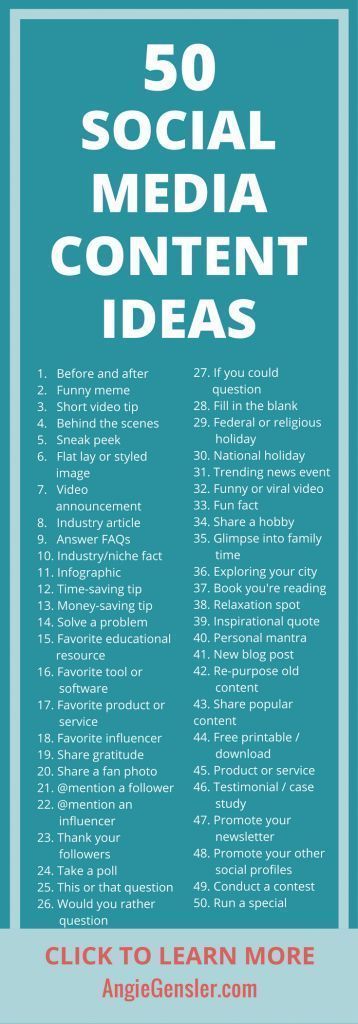
Using the themes you’ve determined, craft a message under each day you plan on posting content. We like to include our hashtags here as well. That way, we can copy and paste everything from the sheet directly into IG and Facebook.
Pro Tip 1:
If you want to use emojis in your caption, you can open up your iMessage on Mac, click to create a new message, and then enter your desired emoji into the type field. Copy and paste it from there into your Google Sheet.

Pro Tip 2:
If you plan on updating your IG bio link or using links in your Facebook or Twitter posts, you should paste these links in a cell below your caption for reference.
Step 4:
Create a folder within the Month folder to store images.
Collect the images you’d like to use for each post. Before dragging them into the Google Drive folder, rename them as the number of the day you plan on posting them. (i.e. Your image for January 17 would be named 17.jpg.) This way, you’ll know exactly what photo goes with what caption when it’s time to post.

Once you’ve uploaded all your images and filled in your monthly calendar, you can sit back and admire your work of art. And revel in the joy of knowing you have content lined up to share for the next four weeks! Woot-woot!
For tips on coming up with content for your calendar, read this blog post:
How To Create A Social Media Calendar

Get our Website Prep Planner, A 6-PAGE WORKBOOK TO HELP YOU ORGANIZE EVERYTHING YOU NEED FOR AN AWESOME WEBSITE.

How do I increase organic traffic to my website?
Your mom is going to visit your website. Your dog would definitely visit your website if he could use the computer. Strangers though? They need a reason to come visit your website. Wanting more organic traffic is pretty much a common theme amongst website owners. So how do you achieve that?

Your mom is going to visit your website. Your dog would definitely visit your website if he could use the computer. Strangers though? They need a reason to come visit your website. Wanting more organic traffic is pretty much a common theme amongst website owners. So how do you achieve that?
1. Make sure you have a specific goal for your website.
Do you want to book more appointments? Grow your list of subscribers? Sell your product? Pick one goal and design your website around it. The main navigation and any CTAs you use should all work toward achieving that goal. For example, if your goal is to book more appointments then you darn well better have several Book Now buttons on your homepage!
Designing a website without a plan is like trying to bake without using a recipe. Throwing a bunch of ingredients haphazardly into a bowl simply won’t work. That said, the first ingredient on every website recipe needs to be a clearly defined goal.

Goals to consider:
Book more appointments
Grow my email list
Sell my product or service online
Drive more foot traffic to my store
2. Know your target audience like the back of your hand.
Once you have the goal of your website locked down, next comes the heavy lifting. It’s a step in the design process that many people wish they could skip … persona research.
“A buyer persona is a research-based profile that depicts a target customer. Buyer personas describe who your ideal customers are, what their days are like, the challenges they face and how they make decisions.”
Researching and building your buyer persona(s) is a critical step of the website design process. Once you know exactly who it is you want visiting your website, you’ll have a much better handle on what it takes to get and keep them there. Your website needs to be a happy place for your target buyer persona. The messaging should speak to them in a language and style they can relate to. The content you provide should be very valuable to them.
“First, show your potential customers that you get them by addressing their pain or need - only then, will they be open to exploring what you have to offer.”
Another plus to fleshing out your buyer persona(s) is you’ll gain insight on where and how they seek information. Are there certain blogs they subscribe to? What websites do they go to for information? Are there specific keywords they’re using in Google searches? Knowing where your buyer persona is hanging out online makes it much easier to get your website in front of them.
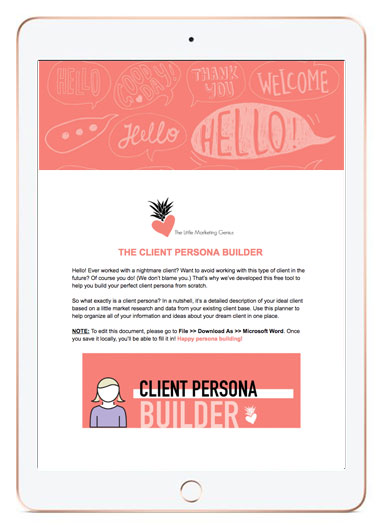
CREATE THE PROFILE OF YOUR DREAM CLIENT USING OUR FREE CLIENT PERSONA BUILDER!
Once you know exactly what your dream client looks like, you’ll never make the mistake of taking on (or marketing to) a nightmare client again. Download our FREE Client Persona Builder tool today.
3. Perform keyword research.
If you want your website to have a chance of ranking in Google search results, then you need to do a little keyword research. Researching ideas for keywords is not rocket science either! You can get ideas from current customers or clients by simply asking them how they’d search for topics related to your business on Google.
You can also perform a little brainstorming session of your own. Open up a blank Word or Google doc and start typing as many search words or phrases you can think of as it relates to your business. After you have your list, start plugging your ideas into the Google search box. When you do this, you’ll notice at the bottom of the results page there is a list of other related searches. Add these to your list as well.
With your keywords plotted out, you can now craft your copywriting for SEO!
Read HubSpot’s Tips for Keyword Optimizing the Most Critical Parts of Your Website

4. Start blogging.
Blogging is a great way to get your small business found on Google. Each time you publish a new blog post, you’re adding a new page to your website that will eventually be indexed. This equates to more opportunities for you to show up in search results!
Your blog should provide value to your target buyer persona by answering their questions and offering up solutions. It should be educational … not sales-y.
A blog is the perfect way to showcase and share your industry knowledge with your audience. When you develop interesting and informative content based on your own expertise and experience it not only positions you as a thought leader, but also creates a fantastic opportunity to share something with your social networks.
Pro Tip! Consider guest blogging on a blog that your buyer personas like to frequent!
Download our free step-by-step guide to blogging!
Implement these four strategies and watch as organic traffic to your website begins to increase. Remember, content is king. Keep those visitors wanting to come back for more!


How To Start A Business Blog
Starting a business blog might seem like a daunting task but we’re here to assure you it isn’t. Today we’ll explain the importance of having a blog and then outline a basic roadmap for getting started.

Starting a business blog might seem like a daunting task but we’re here to assure you it isn’t. Today we’ll explain the importance of having a blog and then outline a basic roadmap for getting started.
Why You Should Have A Business Blog
A blog will help generate traffic to your website. If you’re optimizing your posts for search engines, overtime, they will begin to rank in search results. Blog posts also serve as great content for social media! If your topics are interesting enough, you can expect to see clicks to your website as well as shares.
Step-by-Step Guide For Starting Your Business Blog
1. Research your audience.
A business blog differs from a personal blog in that it focuses on a specific niche and audience. In order to craft blog posts that will draw in your target audience, you first need to identify exactly who your target audience is.
“If you have worked with your company for a long time, you may feel like you have a good grasp on who your customer is, but it still helps to actually put those ideas to paper. Are the majority of your customers male or female? Where do they live? What do they do for a living? What are their buying habits? What are their needs and challenges? What questions do they ask?”
By gaining a deep understanding of your target audience, it will be easier to develop content that truly interests them. Through this process, you’ll also learn what style your messaging should be delivered in and where you audience goes to seek information.
GET Jamie & Katie’s FREE Guide To Blogging!
2. Plot out your keywords.
In order to get found in Google searches, the content on your website and blog needs to reflect what potential site visitors are actually searching for. Make a list of as many long-tail and short-tail keywords as possible.
A long-tail keyword contains three or more words (i.e. chocolate wedding cupcakes Middletown). A short-tail keywords are typically under three words and essentially more broad in nature (i.e. chocolate cupcakes). You’ll want to include a healthy mix of both throughout your website and blog.
“Naturally, short term keywords are bound to give your website more hits since they are less specific. These short tail keywords are able to capture a bigger share of your target market. However, long tail keywords are more about giving quality hits than a large number of traffic. Targeting short tail keywords, however makes yielding positive results difficult and are often time consuming and expensive.”
(Quora)
3. Create an editorial calendar.
Once you’ve developed a list of keywords, coming up with topics to write about will be a breeze. If you’re still left feeling stumped, you can read our post, “3 Ways To Come Up With Blog Post Topics.”
We like to use an editorial calendar so we can tie our blog posts into our other marketing efforts such as social media campaigns and paid Google ads. By planning out our posts in advance, we can easily build other content around each topic and avoid the headaches associated with scrambling for new ideas each week. It’s all about being prepared!
4. Devise a plan for CTAs.
If you’ve enticed a visitor to read a blog post, don’t miss the opportunity to engage them even more! Include a call-to-action that fits the context of each post. Let the reader know what action you’d like them to take next. If you published a post about The Benefits Of Hot Yoga, offer them a Beginner’s Guide To Yoga Poses or a coupon to try a free class. The idea is to keep the visitor active on your website for as long as possible.
5. Track your success.
Whatever platform you use to host your blog, make sure you’re getting the most out of it. Regularly analyze the traffic and CTA clicks for each post so you can see how it stacks up against the rest. Having these insights will allow you to better leverage your hot topics in the future!
6. Share your posts with the world!
Put your social media sites to work and be sure to share each and every blog post with your networks! Include an inspiring image that relates to the post (along with the link) and encourage your followers to share. This will help drive traffic to your blog and hopefully score you new subscribers!
